
If you have recently noticed changes in a loved one’s memory or behavior, you have likely come across the terms Alzheimer’s disease and dementia. While people often use them interchangeably, they are not the same condition. Understanding the core differences of Alzheimer’s vs. dementia can help families make informed decisions about care, medical treatment, and long-term planning.
What Is Dementia?
First, it is important to understand that dementia is not a single, specific disease. Instead, it is an umbrella term that describes a group of symptoms. These symptoms generally affect memory, thinking, communication, reasoning, and daily functioning.
Consequently, people living with dementia may experience a wide range of challenges, including:
- Progressive memory loss
- Difficulty solving everyday problems
- Confusion about time or place
- Trouble finding the right words
- Sudden changes in mood or personality
- Difficulty completing familiar tasks
Ultimately, these symptoms become severe enough to interfere with a person’s independent everyday life.
What Is Alzheimer’s Disease?
In contrast, Alzheimer’s disease is a specific, diagnosed condition. In fact, it is the most common cause of dementia, accounting for approximately 60% to 80% of all cases.
Physicians classify it as a progressive brain disease. It gradually destroys the nerve cells responsible for memory, thinking, and behavior. Because it is progressive, symptoms typically worsen over time and eventually require around-the-clock care.
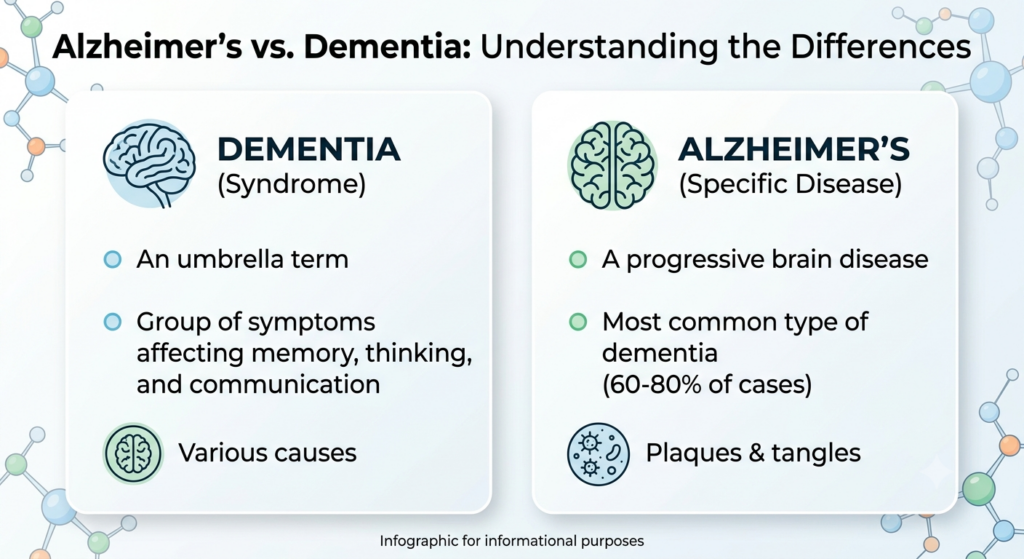
Alzheimer’s vs. Dementia: Key Differences
To simplify the comparison, consider this rule of thumb: all Alzheimer’s disease causes dementia, but not all dementia is Alzheimer’s disease.
| Feature | Dementia | Alzheimer’s Disease |
| Definition | A broad group of symptoms | A specific, diagnosed disease |
| Causes | Can have many different causes | One specific cause of dementia |
| Progression | Symptoms vary greatly by cause | Follows a predictable, degenerative path |
| Treatments | Sometimes treatable if caused by a secondary condition | Currently has no cure, but treatments can slow progression |
Other Common Types of Dementia
Because dementia is an umbrella term, several conditions fall underneath it. Besides Alzheimer’s, doctors frequently diagnose the following types:
Vascular Dementia
This type often develops after a stroke or due to reduced blood flow to the brain. As a result, symptoms may appear suddenly or progress in distinct stages.
Lewy Body Dementia
This condition commonly causes visual hallucinations, movement difficulties, and sleep disturbances. Patients also experience frequent fluctuations in alertness.
Frontotemporal Dementia
This type typically affects younger adults. It often begins with noticeable changes in personality, judgment, or language before memory loss even occurs.
Mixed Dementia
In some cases, individuals have more than one type of dementia simultaneously. For instance, a person might live with a combination of Alzheimer’s disease and vascular dementia.

Early Warning Signs to Watch For
Recognizing the signs early can lead to better medical care and more effective planning. Common early symptoms include:
- Frequently forgetting recent conversations
- Misplacing items in unusual places
- Asking the same questions repeatedly
- Difficulty following recipes or managing monthly finances
- Getting lost in familiar neighborhoods
- Withdrawing from favorite social activities
How Doctors Diagnose Alzheimer’s
Currently, there is no single test that can diagnose Alzheimer’s disease. Instead, physicians use a comprehensive combination of tools, including:
- Detailed medical histories
- Thorough physical examinations
- Cognitive and memory assessments
- Advanced brain imaging (like MRI or CT scans)
- Blood tests to rule out other conditions
- Interviews with close family members
Furthermore, a specialist such as a neurologist or a geriatrician will usually participate in making the final diagnosis.
Current Treatment Options
Although science cannot currently cure Alzheimer’s, specific treatments can help manage daily symptoms. Common approaches include:
- Prescription medications to slow cognitive decline
- Regular, safe physical activity
- Brain-stimulating exercises and activities
- Healthy, balanced nutrition
- Structured, predictable daily routines
- Consistent social engagement
Additionally, professional supportive care plays a significant role in maintaining a high quality of life.
When Is Memory Care the Right Choice?
As the disease progresses, many families find that caring for a loved one at home becomes increasingly difficult. When safety and daily care needs exceed what you can provide at home, dedicated memory care communities can help.
Typically, memory care communities provide:
- Secure environments to prevent wandering
- Professional staff trained specifically in dementia care
- Rigorous medication management
- Structured daily activities designed for cognitive health
- Nutritious, chef-prepared meals
- Personalized support available around the clock
Choosing these specialized services can significantly improve your loved one’s safety while reducing overall caregiver burnout.
Supporting Families Through Every Stage
Receiving an official diagnosis can feel overwhelming, but your family does not have to navigate this journey alone. Learning about the differences between Alzheimer’s vs. dementia early allows you to explore care options before a crisis occurs.
At Assisted Living on Broadway, our compassionate team specializes in person-centered memory care. We design our programs specifically to help residents maintain dignity, comfort, and meaningful daily experiences. If you are wondering whether memory care is the right next step for your loved one, we are always here to help.