
Dementia is a progressive condition, meaning symptoms gradually worsen over time. While every individual experiences cognitive decline differently, understanding the common timeline can help families prepare for changing medical and physical care needs.
To help map this journey, doctors frequently look to clinical staging models. One of the most widely used frameworks is the Global Deterioration Scale (GDS). This specific model divides the progression of the 7 stages of dementia into clear, manageable phases.
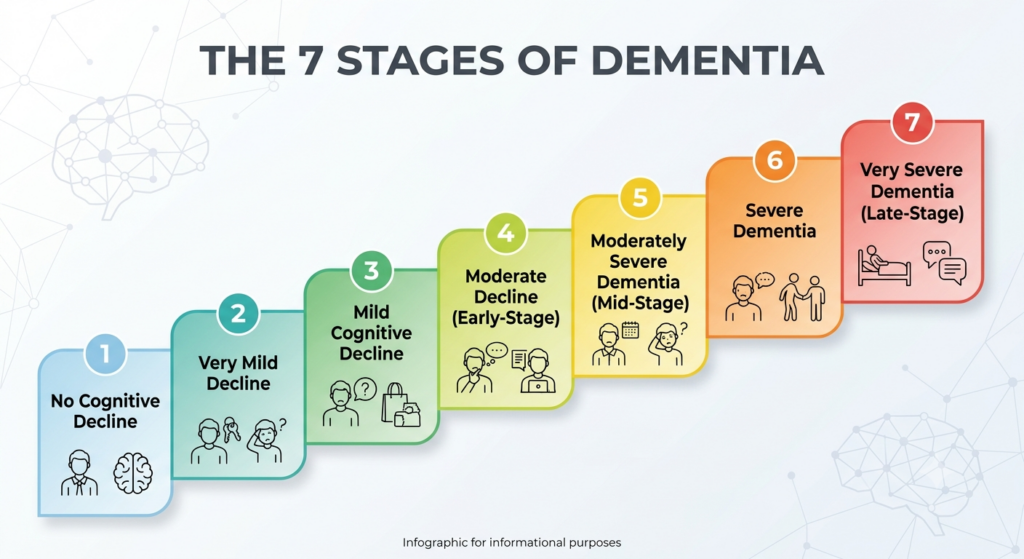
The Pre-Dementia Phases (Stages 1–3)
During the earliest steps of the progression, symptoms can be incredibly subtle. Often, these early signs are hard to distinguish from normal, age-related changes.
Stage 1: No Cognitive Decline
At this initial point, no noticeable symptoms are present. Individuals function completely normally, maintain their independence, and show no signs of memory loss during clinical interviews.
Stage 2: Very Mild Cognitive Decline
In this phase, people may occasionally forget names, appointments, or where they placed everyday household items. Generally, health professionals and family members consider these minor lapses a normal part of the aging process.
Stage 3: Mild Cognitive Decline
During this phase, friends and family members usually begin noticing distinct changes. Common symptoms to look out for include:
- Increased difficulty concentrating on tasks
- Frequently losing or misplacing valuable items
- Forgetting recent conversations or events
- Experiencing trouble organizing daily tasks
- Noticing a decreased performance at work
Because these changes become more prominent, many families choose to seek a formal medical evaluation during this third period.
The Dementia Phases (Stages 4–7)
Once an individual transitions into the fourth phase, clear clinical signs of dementia emerge. At this point, independent living becomes increasingly difficult.
Stage 4: Moderate Cognitive Decline (Early-Stage Dementia)
Memory loss now becomes much more apparent during daily interactions. Consequently, individuals frequently experience visible difficulty with:
- Managing personal finances and paying monthly bills
- Preparing multi-step meals safely
- Remembering significant recent events or personal history
- Traveling independently to unfamiliar locations
- Completing complex, multi-layered tasks
Because of these barriers, some consistent daily assistance becomes necessary to keep the individual safe.
Stage 5: Moderately Severe Dementia (Mid-Stage Dementia)
At this turning point, individuals can no longer survive safely without daily caregiver support. Common symptoms during this critical time include:
- Forgetting major personal information, such as an address or phone number
- Experiencing severe confusion about dates, seasons, or current locations
- Facing difficulty choosing appropriate clothing for the weather
- Needing direct verbal reminders to maintain personal hygiene
Because the demands of care increase so significantly here, many families begin actively exploring professional memory care options during this fifth period.
Stage 6: Severe Dementia
Memory loss now profoundly impacts almost every aspect of everyday life. During this advanced time, individuals may:
- Forget the names of close family members or mistake their spouse for a stranger
- Begin wandering or getting lost easily
- Experience major personality changes, anxiety, or delusions
- Become incontinent of the bladder or bowel
- Require hands-on assistance with basic activities of daily living, including bathing, dressing, and eating
Understandably, caregiver demands increase substantially during this time, often requiring around-the-clock supervision.
Stage 7: Very Severe Dementia (Late-Stage Dementia)
This is the final phase of the progressive condition. At this stage, individuals often:
- Lose their remaining verbal communication abilities
- Require total, continuous physical assistance for all care
- Have severe difficulty swallowing food or liquids
- Spend a significant portion of the day sleeping
- Become increasingly physically frail and lose basic motor skills, like sitting or walking
Ultimately, medical support during this final phase focuses heavily on providing comfort, maximizing dignity, and protecting the individual’s quality of life.
How Long Does Each Stage Last?
there is no universal timeline for how quickly these steps progress. Some individuals progress slowly over many years, while others experience a much faster decline. The exact speed depends heavily on several unique variables, including:
- The specific type of dementia diagnosed (such as Alzheimer’s or Vascular dementia)
- The individual’s overall physical health
- Their current age at onset
- The presence of other co-occurring medical conditions
When Should Families Consider Memory Care?
Navigating the 7 stages of dementia can become overwhelming for at-home caregivers. Families often benefit from transitioning their loved one to a dedicated memory care community when:
- Physical safety at home becomes an urgent concern.
- Wandering behaviors increase or become dangerous.
- Managing complex medication schedules becomes too difficult.
- Caregiver stress and burnout become entirely overwhelming.
- Hands-on assistance is required consistently throughout the day and night.
Making the move earlier in the diagnosis often allows individuals to adapt to their new surroundings more comfortably. Furthermore, it helps them build meaningful relationships with staff and participate in structured communities.
Supporting Every Stage With Compassion
Understanding these different milestones allows families to prepare emotionally and practically for what lies ahead. While the caregiving journey is never simple, compassionate care, specialized activities, and a structured environment can greatly improve a resident’s daily routine.
At Assisted Living on Broadway, our dedicated memory care team provides highly personalized support tailored to each resident’s unique stage and remaining abilities. We are here to help your family feel confident, supported, and educated every step of the way.